Enterprise Design System & Repository
DirecTV · Lead Product Designer
Design teams were moving fast across web, iOS, Android, and set-top box, but without a shared foundation to build on. The opportunity was clear: create a single place where designers, engineers, and content strategists could find what they needed, trust that it was current, and contribute back without friction. A system that would let the whole organization move faster together, instead of solving the same problems independently.
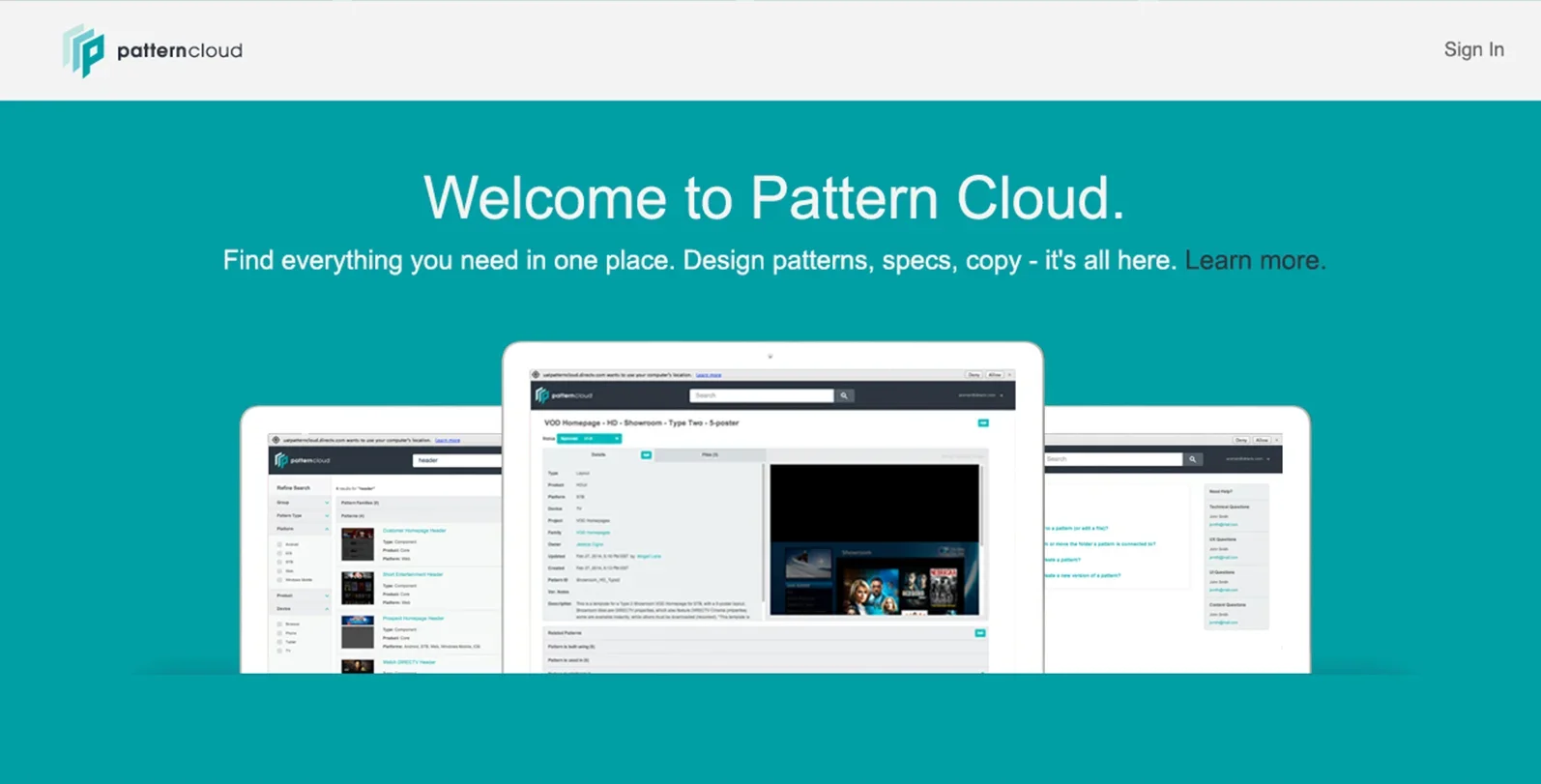
Opportunity
No single source of truth
Assets, specs, and copy guidelines were fragmented across personal drives, email chains, and unstructured folders.
Duplicated effort
Designers, engineers, and content strategists were recreating existing patterns, waiting on file-sharing bottlenecks, and onboarding without structured documentation.
Inconsistent experiences
No shared libraries, cross-functional teams independently solved the same design problems, often differently.
Scaling friction
As external agencies and new hires joined, the cost of bringing them up to speed grew, and there was no scalable alternative to 1:1 hand-holding.
Design System Architecture
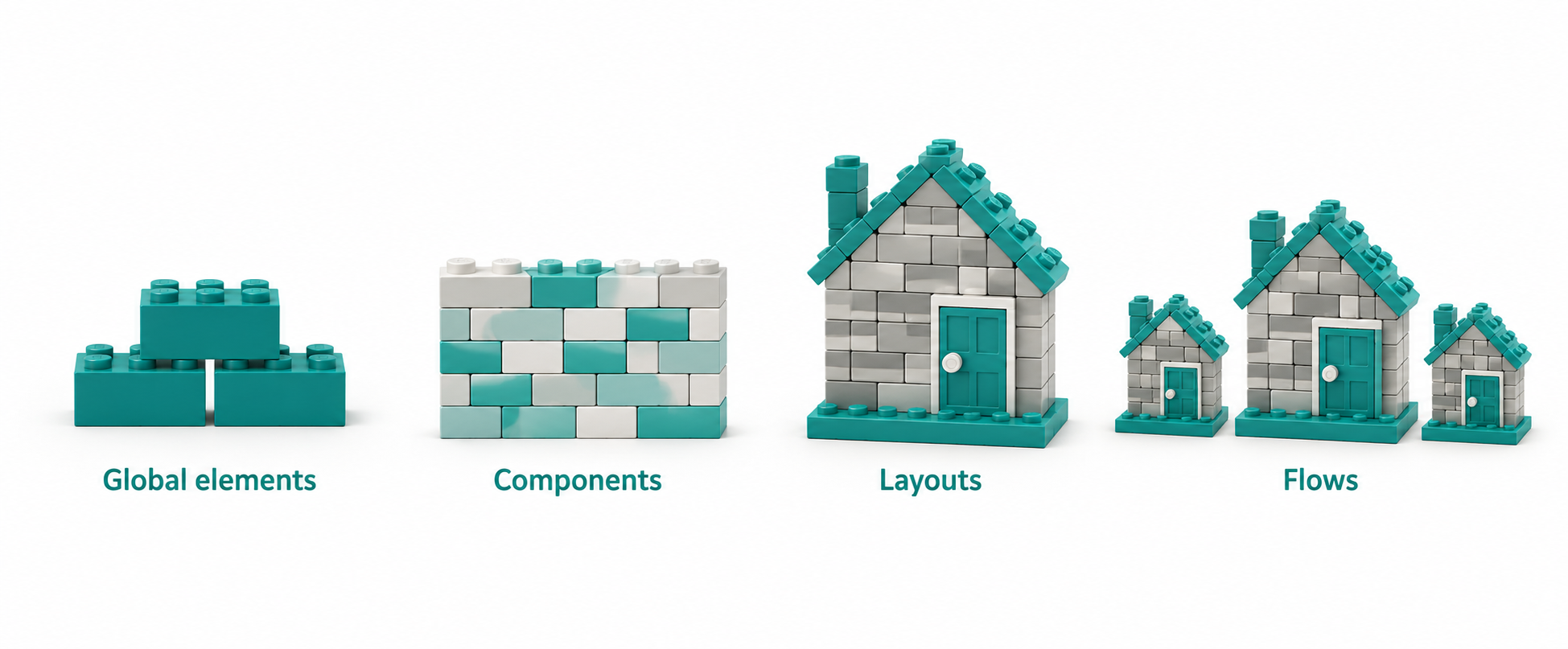
A foundational information architecture decision was defining and codifying what a "design pattern" meant within DirecTV's design system, since different disciplines used the term inconsistently. I established a four-level hierarchical taxonomy that became the structural backbone of the entire system:
Global Elements: atomic, reusable UI building blocks: buttons, icons, CTAs
Components: functional combinations of elements: video player, header bar, navigation, section headers
Layouts: page-level component arrangements: browse views, checkout flows, homepage structures
Flows: end-to-end multi-screen user journeys: onboarding, self-care, content browsing
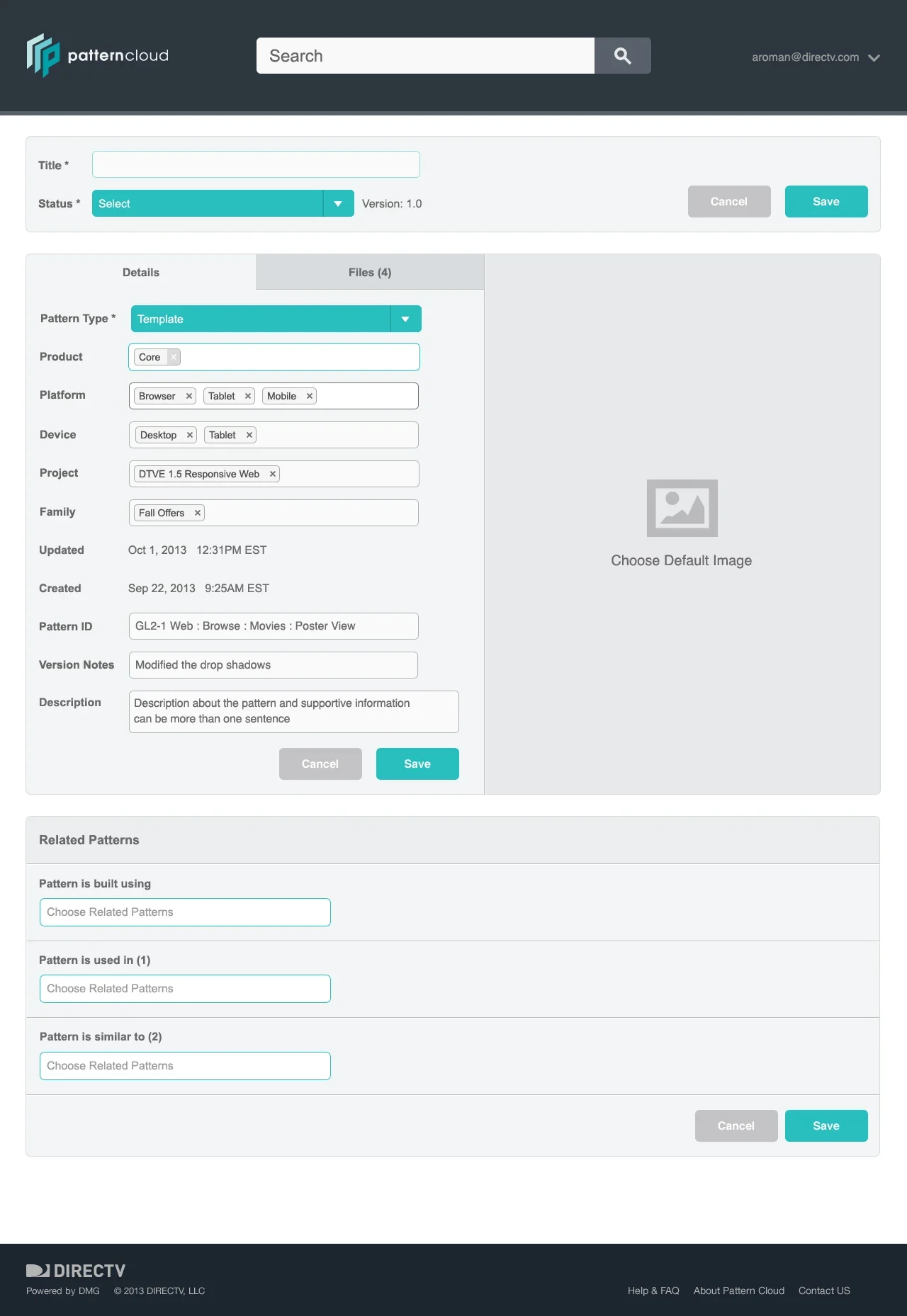
Each pattern could contain any combination of deliverables: visual design files, content guidelines, interaction specs, developer documentation, sample code, and working prototypes — making the design system genuinely cross-functional rather than designer-only.
This taxonomy defined naming conventions, filing structures, search filtering logic, and pattern relationship mapping throughout the product.
Solutions
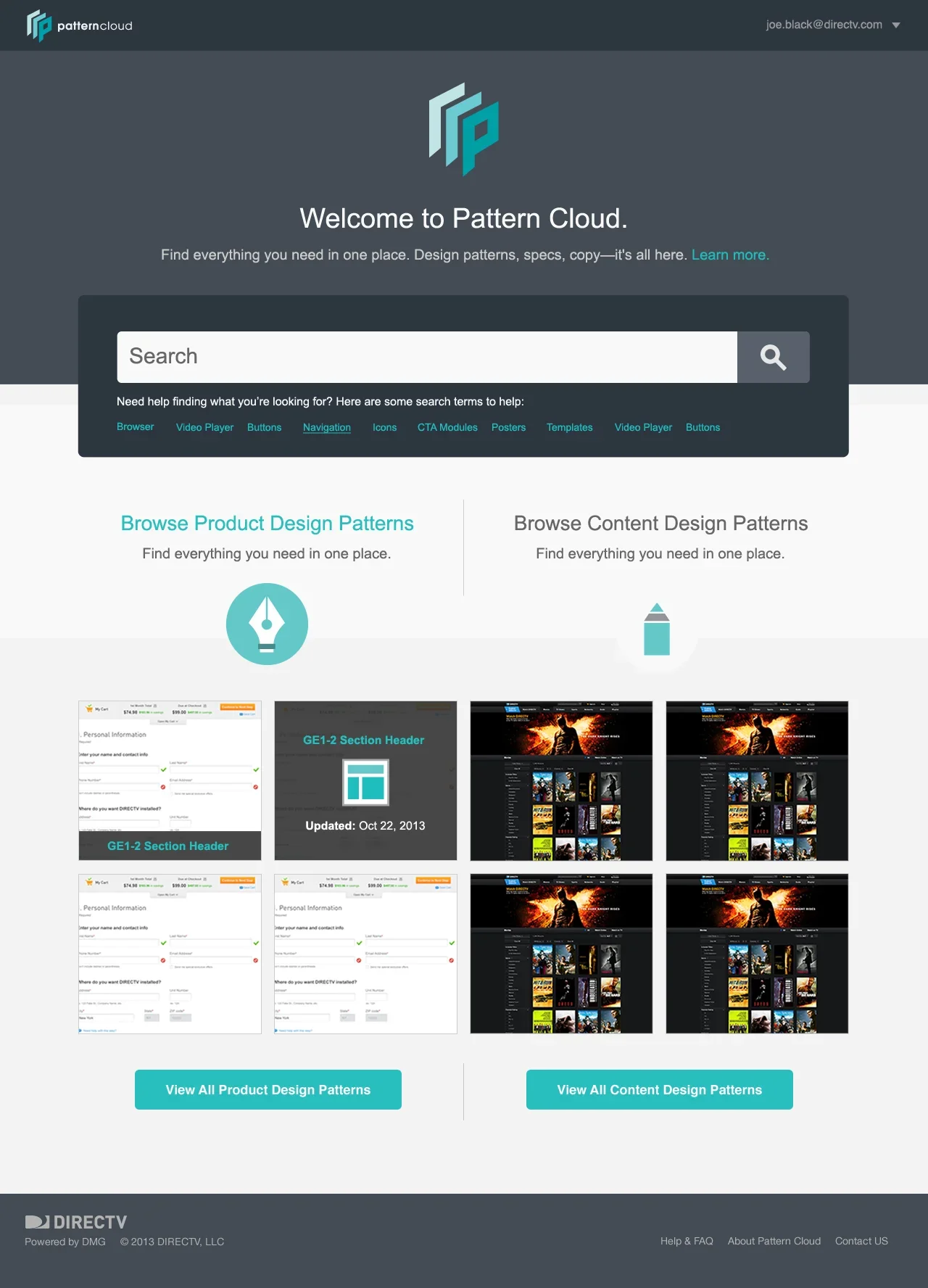
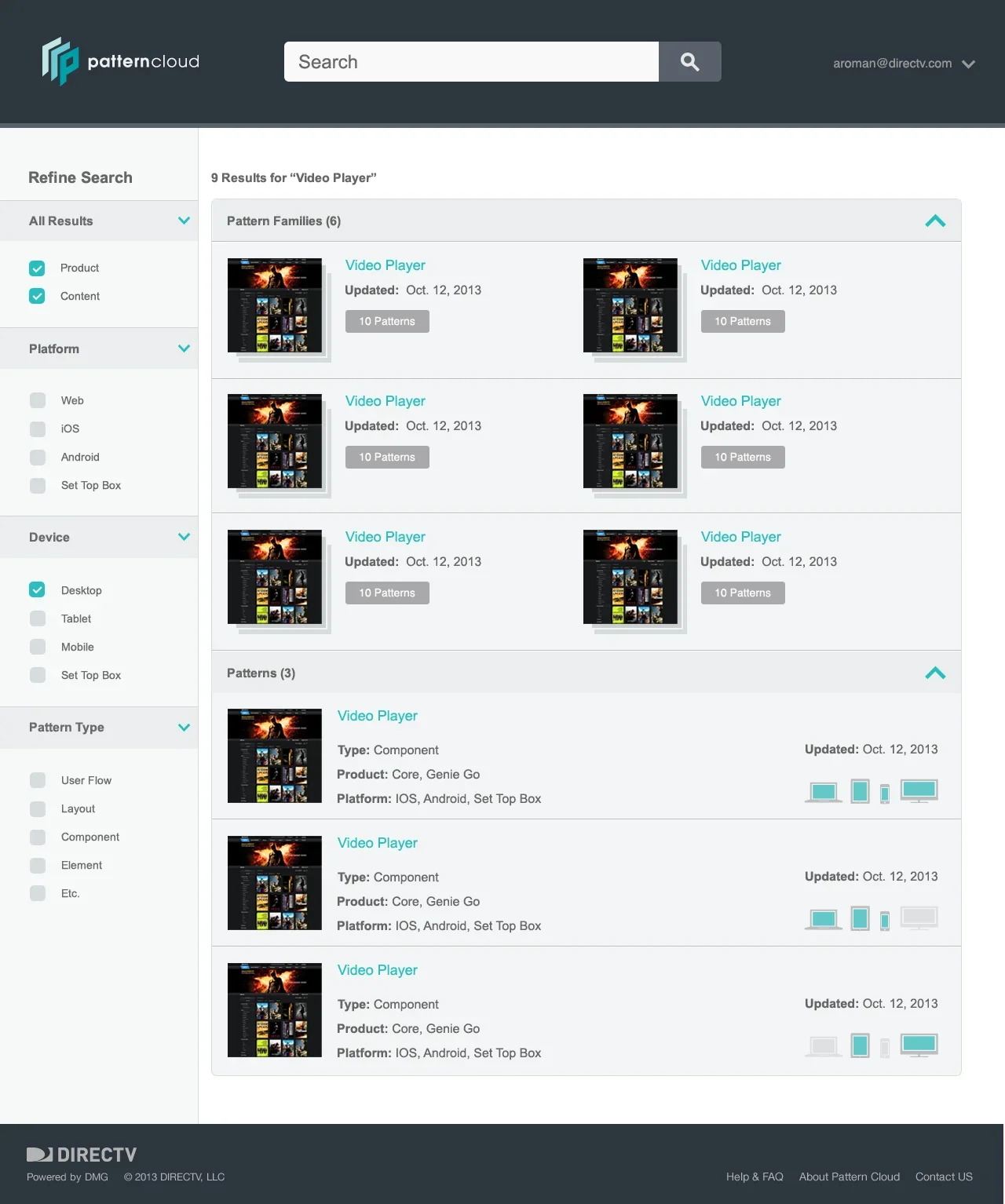
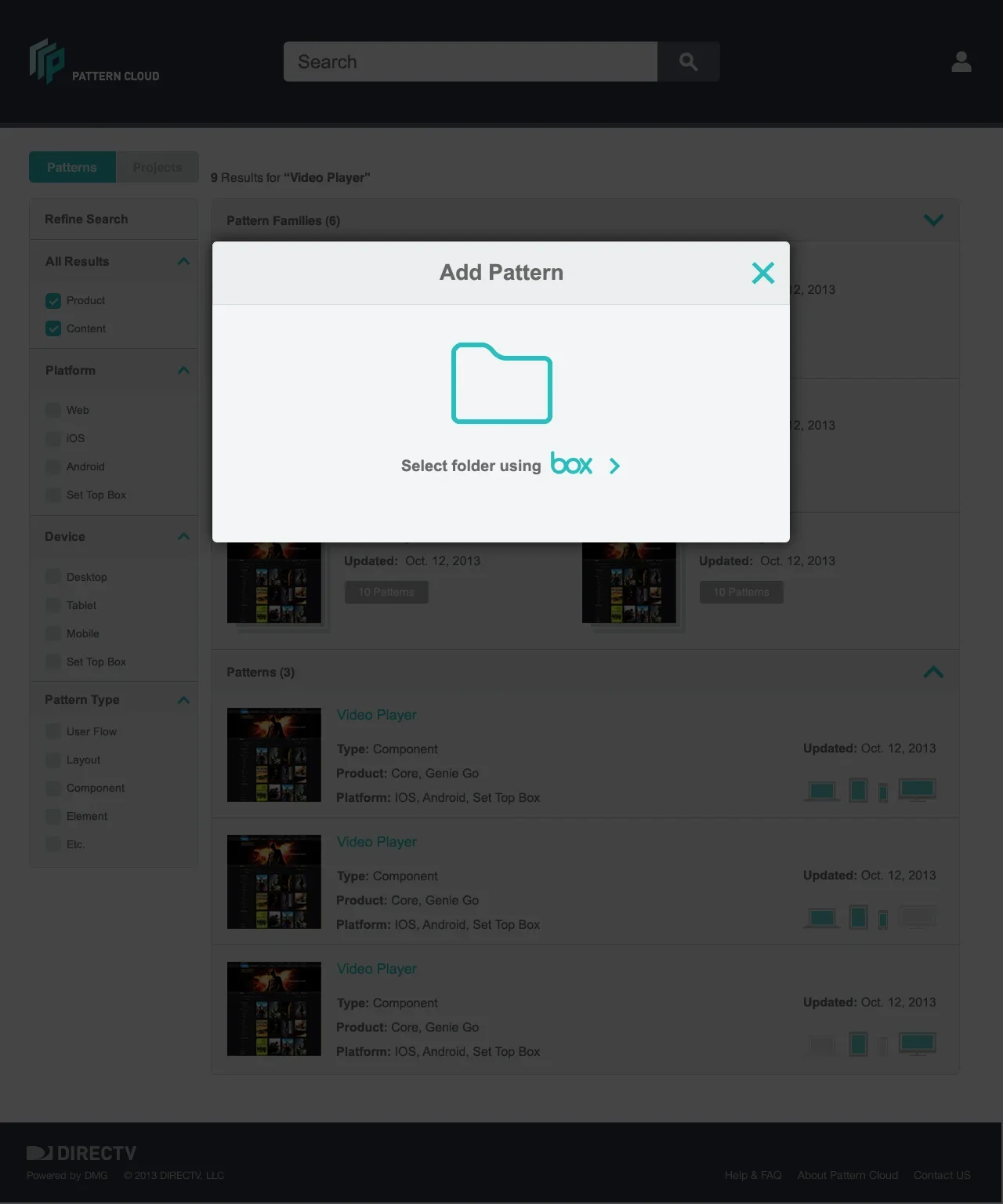
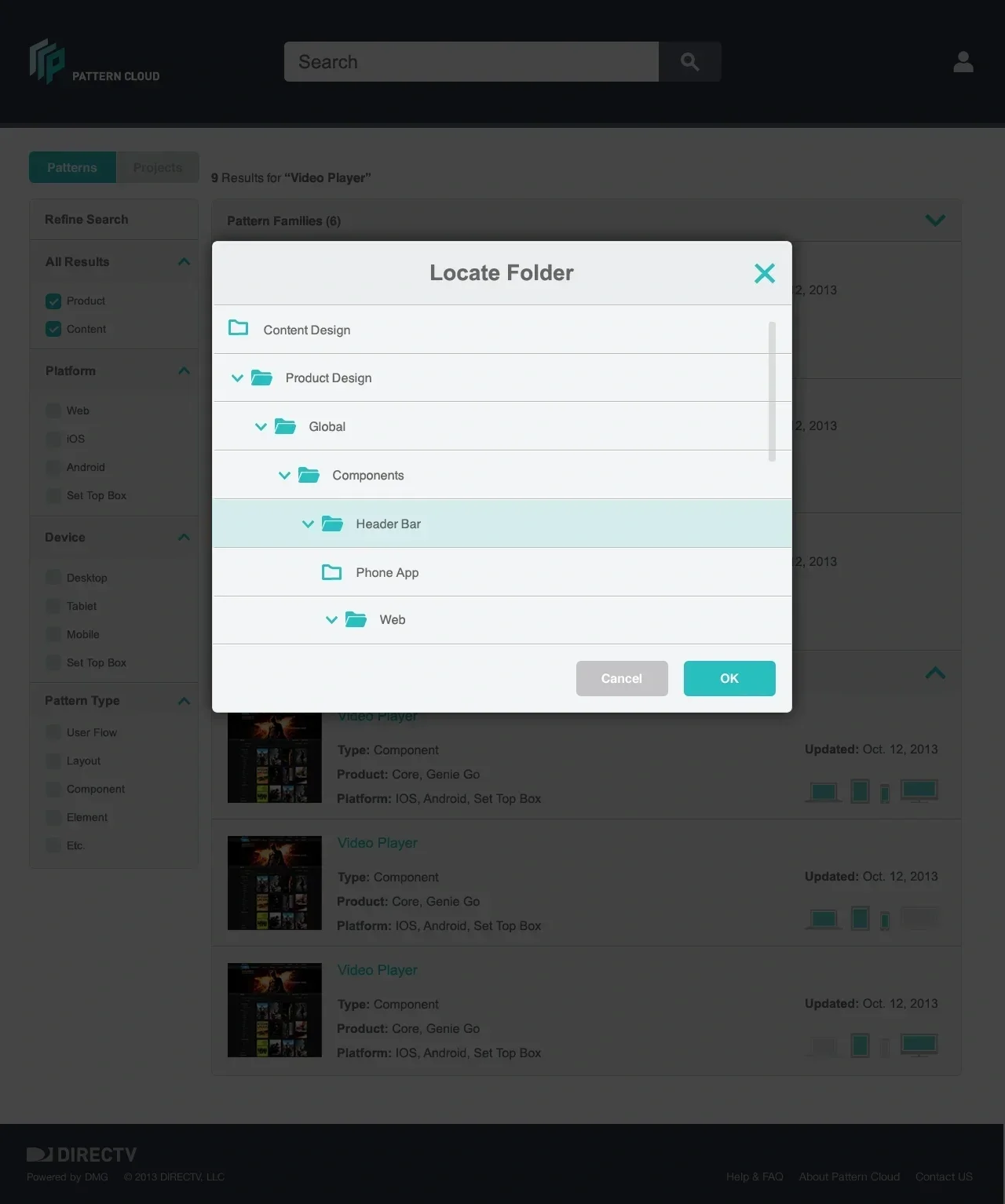
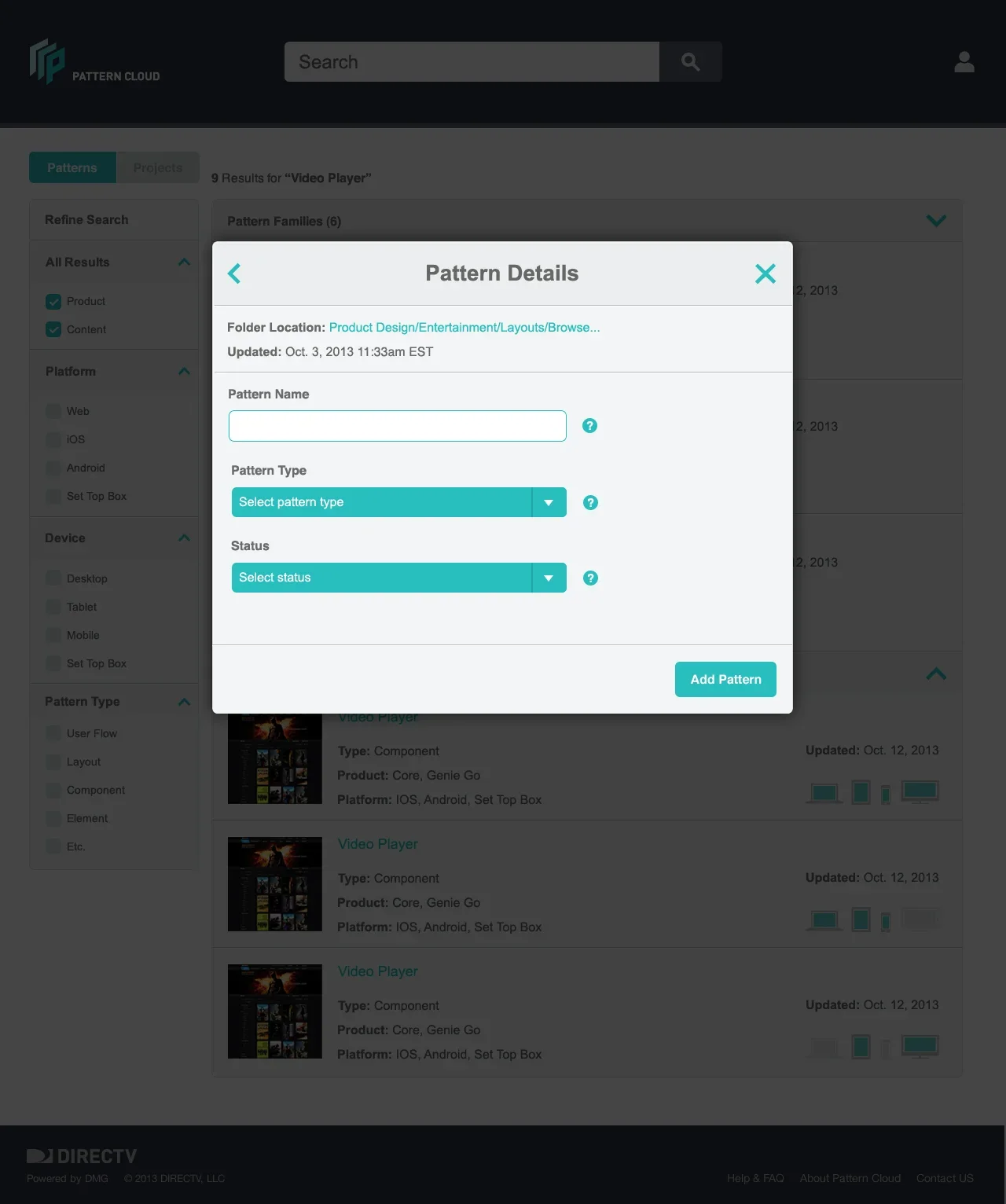
Pattern Cloud's design centered on these interconnected solutions: a faceted search experience organized by platform, device, and pattern type returning results in two tiers; pattern detail pages surfacing versioned files, metadata, status indicators, and a three-way relationship graph that connected patterns rather than siloing them; a progressive Add Pattern flow via Box integration that reduced contribution friction and enabled community-driven growth; and a homepage with parallel browse paths for Product and Content Design teams with suggested search terms that doubled as onboarding vocabulary.
Repository
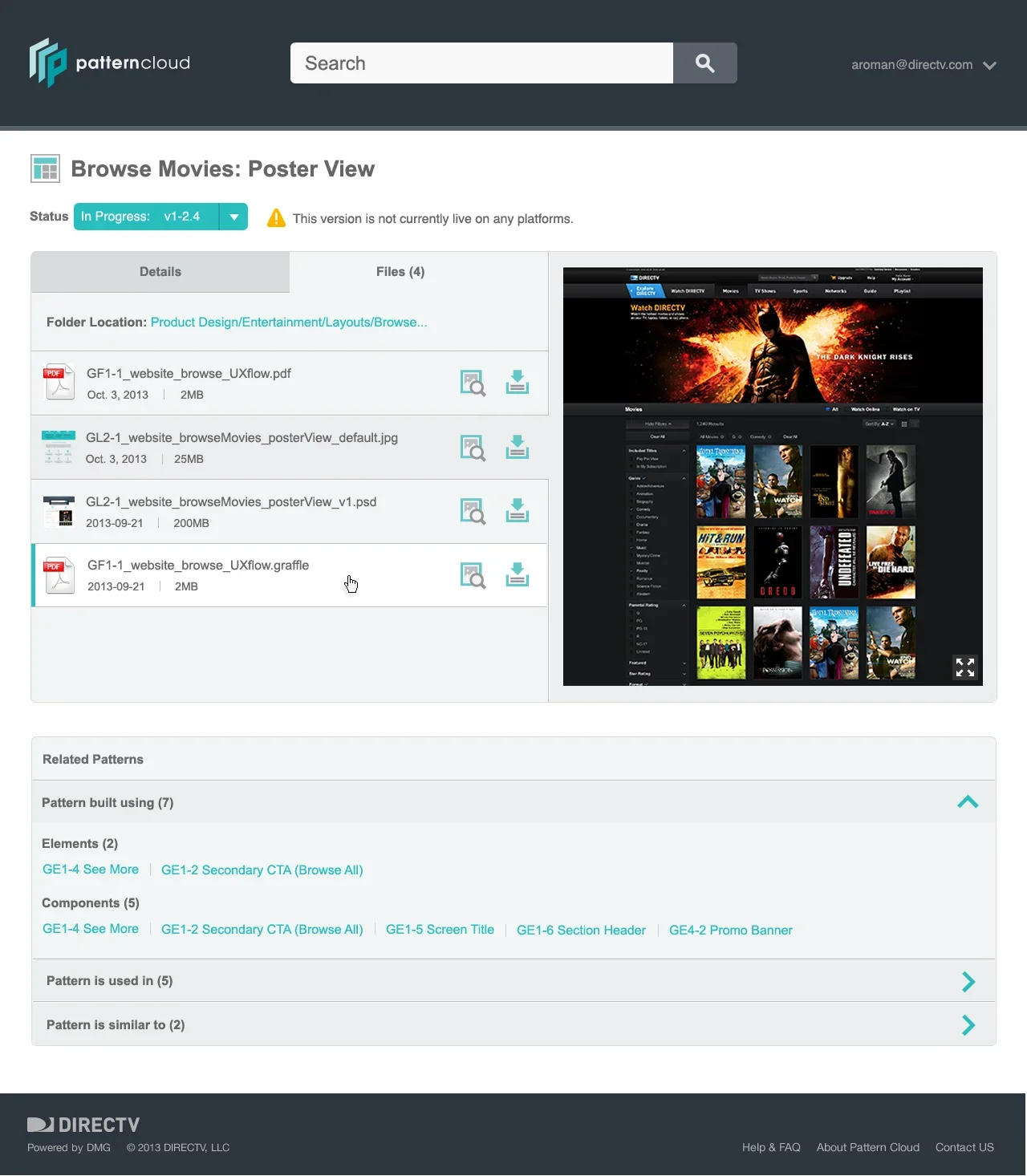
Design System
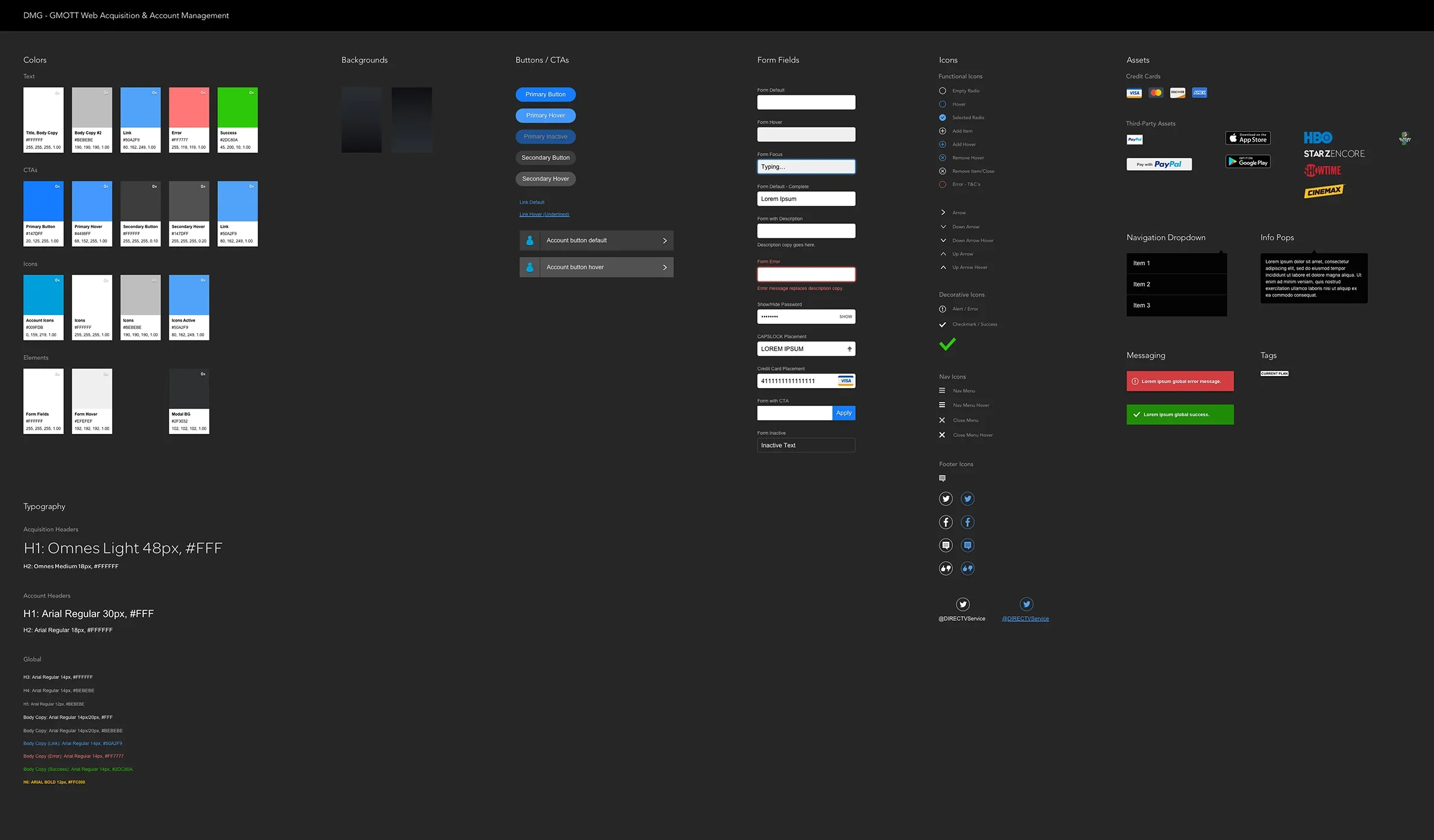
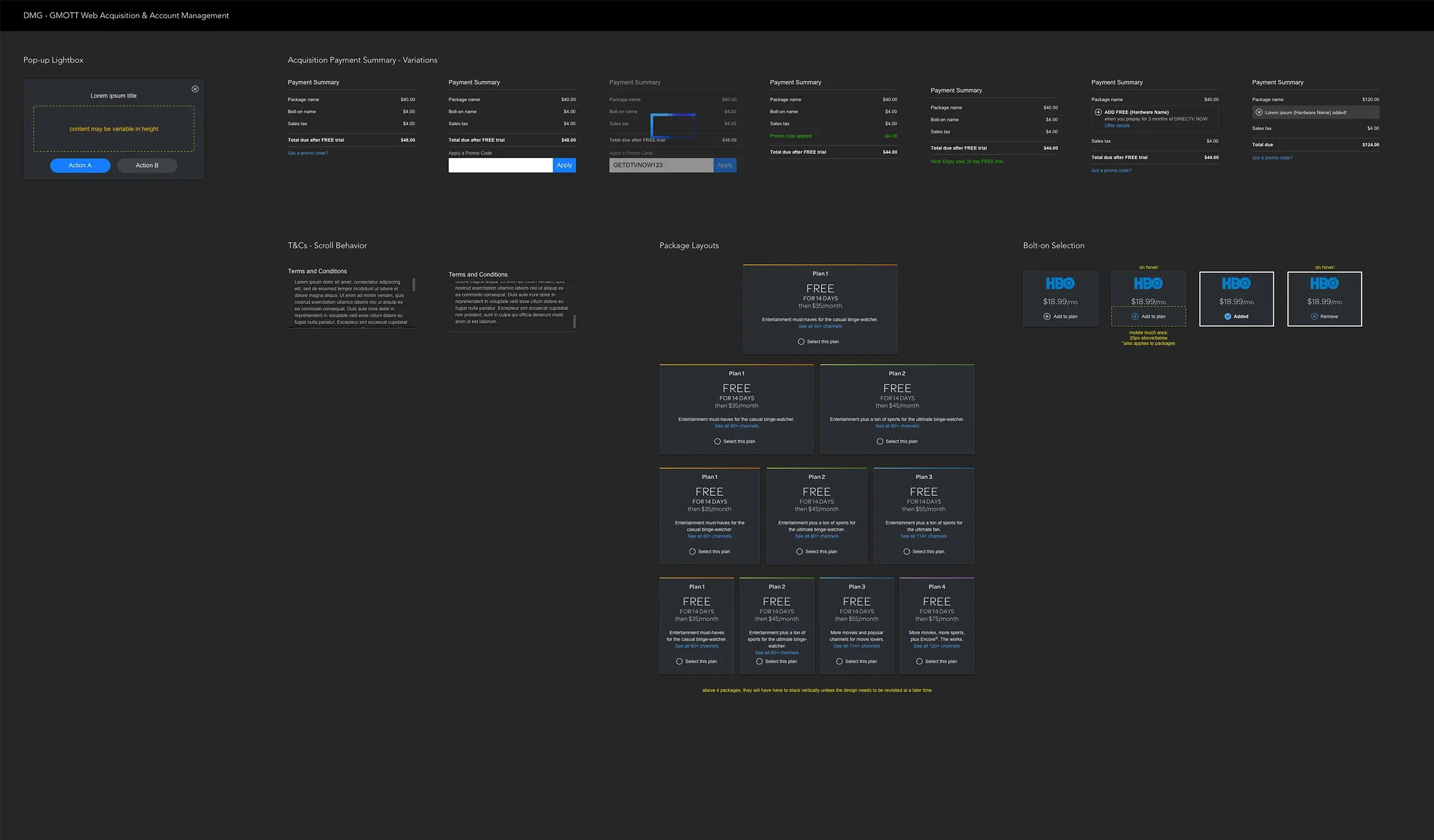
Visual Identity & Logo Design
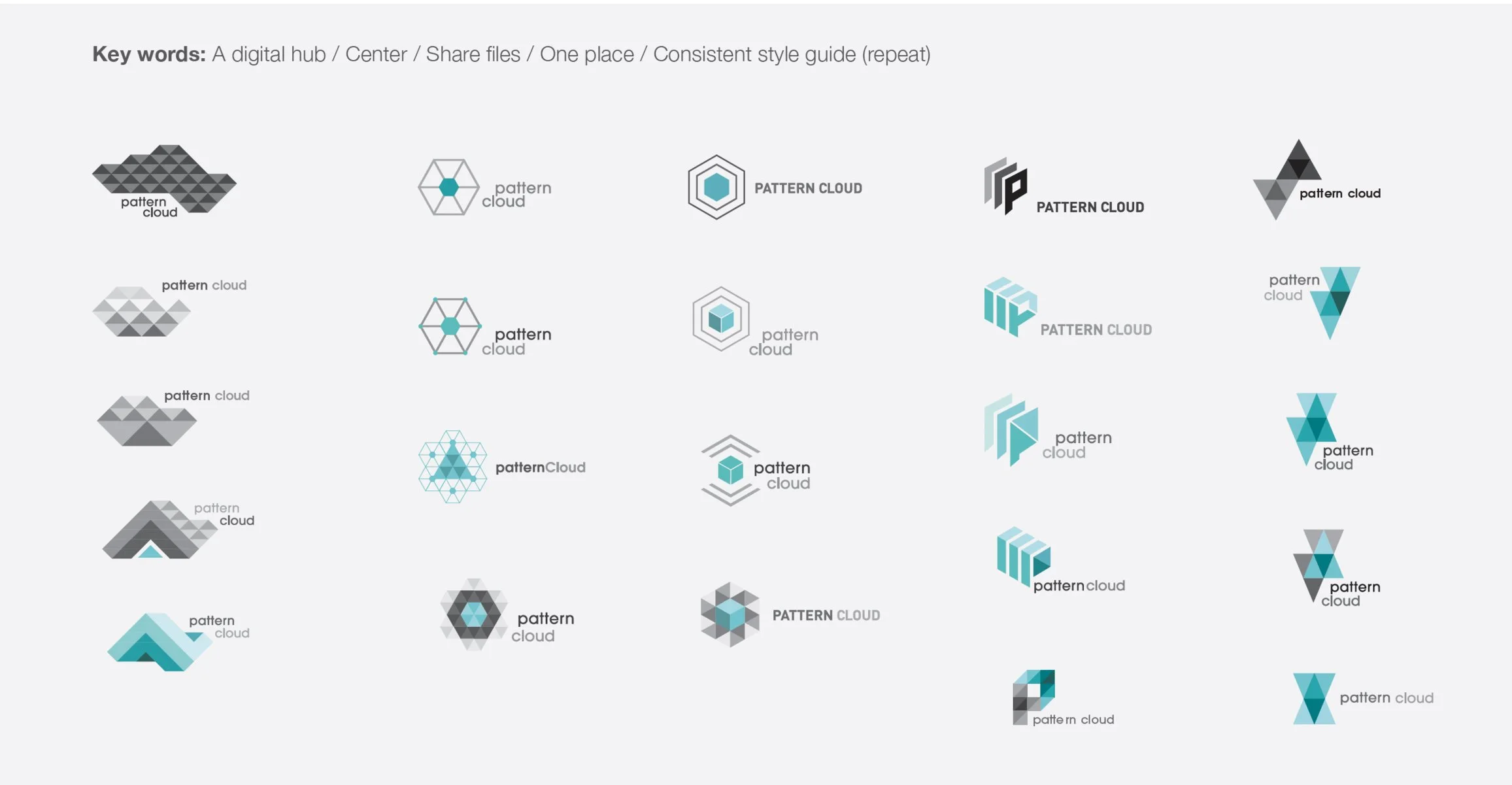
Pattern Cloud required a distinct visual identity to establish credibility as an enterprise product, not just an internal tool. I led an extensive logo design exploration process generating 20+ distinct concepts organized around core brand keywords: digital hub, centralization, file sharing, consistency, and design systems.
The final direction, a stacked layered “P” mark, communicated structure, layering, and the digital repository nature of the product while remaining legible.
Impact
Pattern Cloud launched as DirecTV's centralized design system hub, serving cross-functional teams across the full organization. Key outcomes included:
Established a single source of truth for 200+ design patterns, UI components, specs, copy guidelines, and versioned design files across DirecTV's digital product suite.
Cut new employee and agency onboarding time by approximately 40% by providing structured, searchable access to the design system without requiring internal resource allocation.
Scaled design consistency across web, iOS, Android, and set-top box through a shared component library and four-level pattern taxonomy adopted across all product teams.
Reduced duplicated design effort by an estimated 30% by giving designers, engineers, and content strategists direct, self-serve access to current, approved patterns.
Served 8 distinct user types across 4 platforms enabling engineers and product managers to independently locate, evaluate, and act on design patterns using status indicators and platform metadata.
Validated at enterprise scale the DirecTV design system and design language, with Pattern Cloud as its backbone, was adopted as the org-wide standard.