Walmart Design Systems
Built and scaled Walmart's Merchandising and Marketplace design systems from the ground up, leading cross-functional teams to drive org-wide adoption across 6+ teams and multiple enterprise platforms.
Opportunity
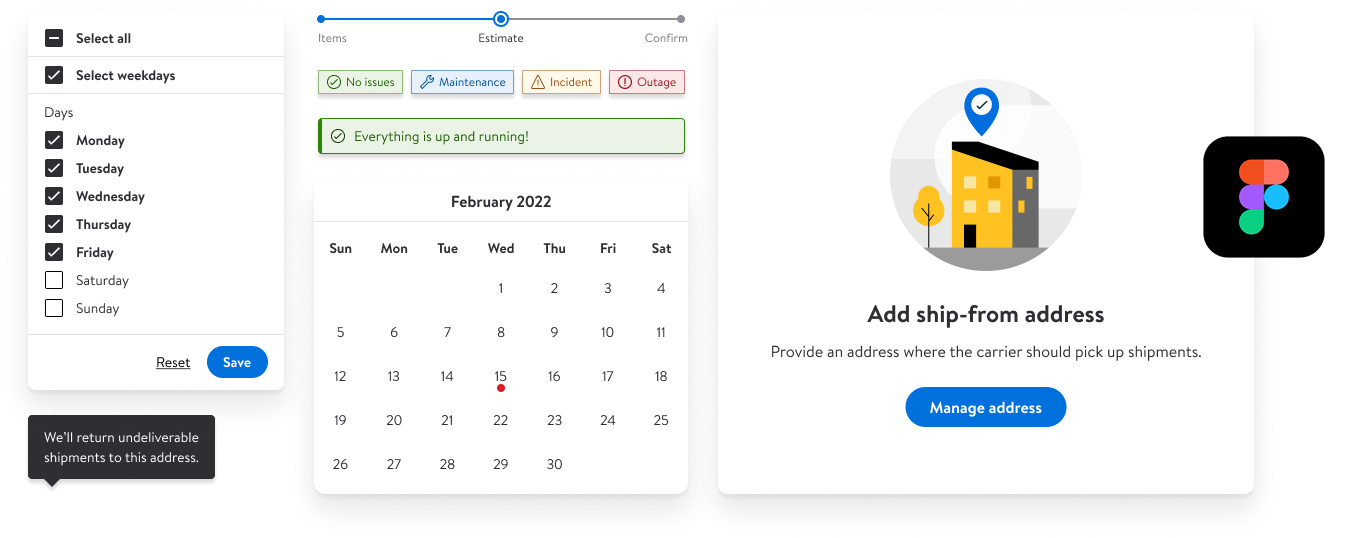
Walmart's merchandising tools lacked unified design standards, creating inefficiencies across design, engineering, and product teams. Without a shared system, component creation was slow, onboarding was difficult, and engineering handoff required excessive back and forth. There was also a broader need to build trust in Merch tools through consistent branding and quality, and to express Walmart's visual identity to third-party suppliers in a cohesive, customer-grade experience.
Solution
As Principal Lead, I created the LDM and LDE Design Systems, defining foundational components, patterns, and visual guidelines that improved scalability and cross-team consistency. With a mobile-first approach, I ensured clarity and responsiveness across devices while simplifying complex user flows. This work spanned multiple phases, scaling from the Merchandising suite to support the Merch One product and ultimately laying the groundwork for the Walmart Marketplace and Enterprise Design Systems org-wide.
Timeline and Roadmap
Time was always the biggest constraint. Because the libraries needed to keep pace with live product deadlines, we rarely had room for extended testing cycles. Instead, we leaned on internal feedback loops, community input, and iterative releases to keep things moving without compromising quality.
Research
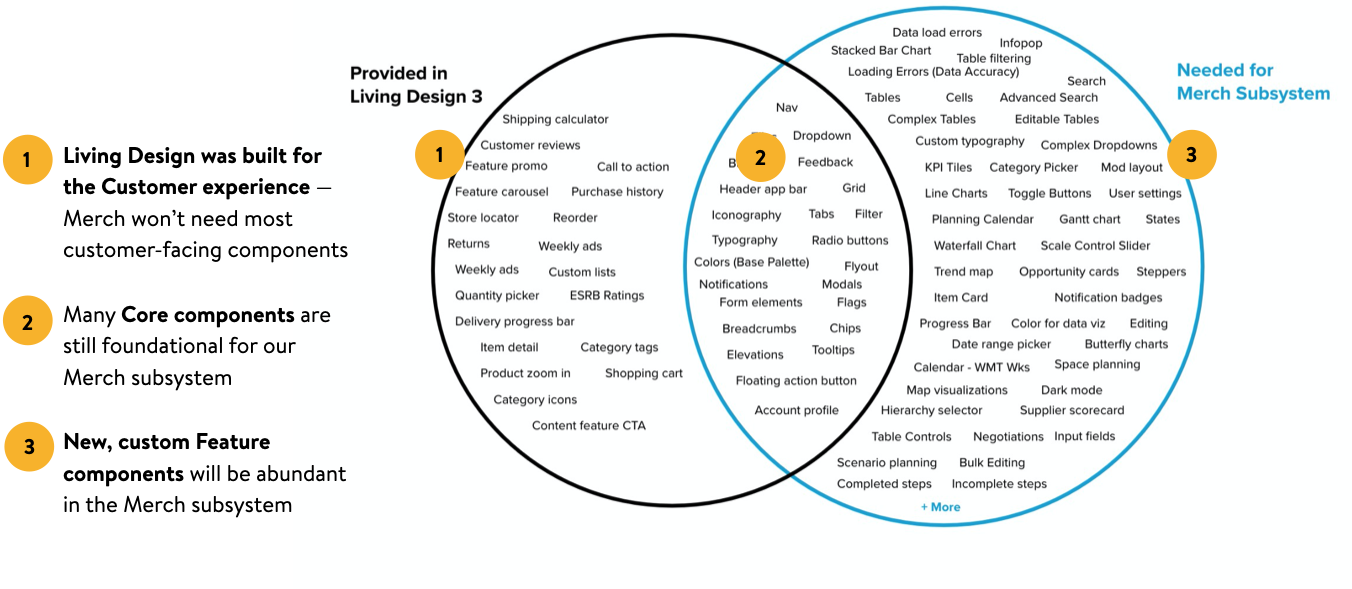
Research and validation were built into the process from the start. We conducted a component audit and competitive analysis to identify gaps between the existing Living Design System, which was built for customer-facing experiences, and what the Merch subsystem actually required. This analysis revealed three distinct categories: foundational components that could be inherited, customer-facing components Merch would not need, and a significant set of new custom components that would need to be built from scratch. From there, we hosted Design System Office Hours multiple times a week with designers, engineers, and PMs to surface edge cases and build shared ownership. To validate in real time, we embedded alongside product teams building new features, integrating in-progress components into their testing flows and joining usability sessions whenever possible. This kept iteration fast and grounded in how components actually performed in production.
Living Design + Merch
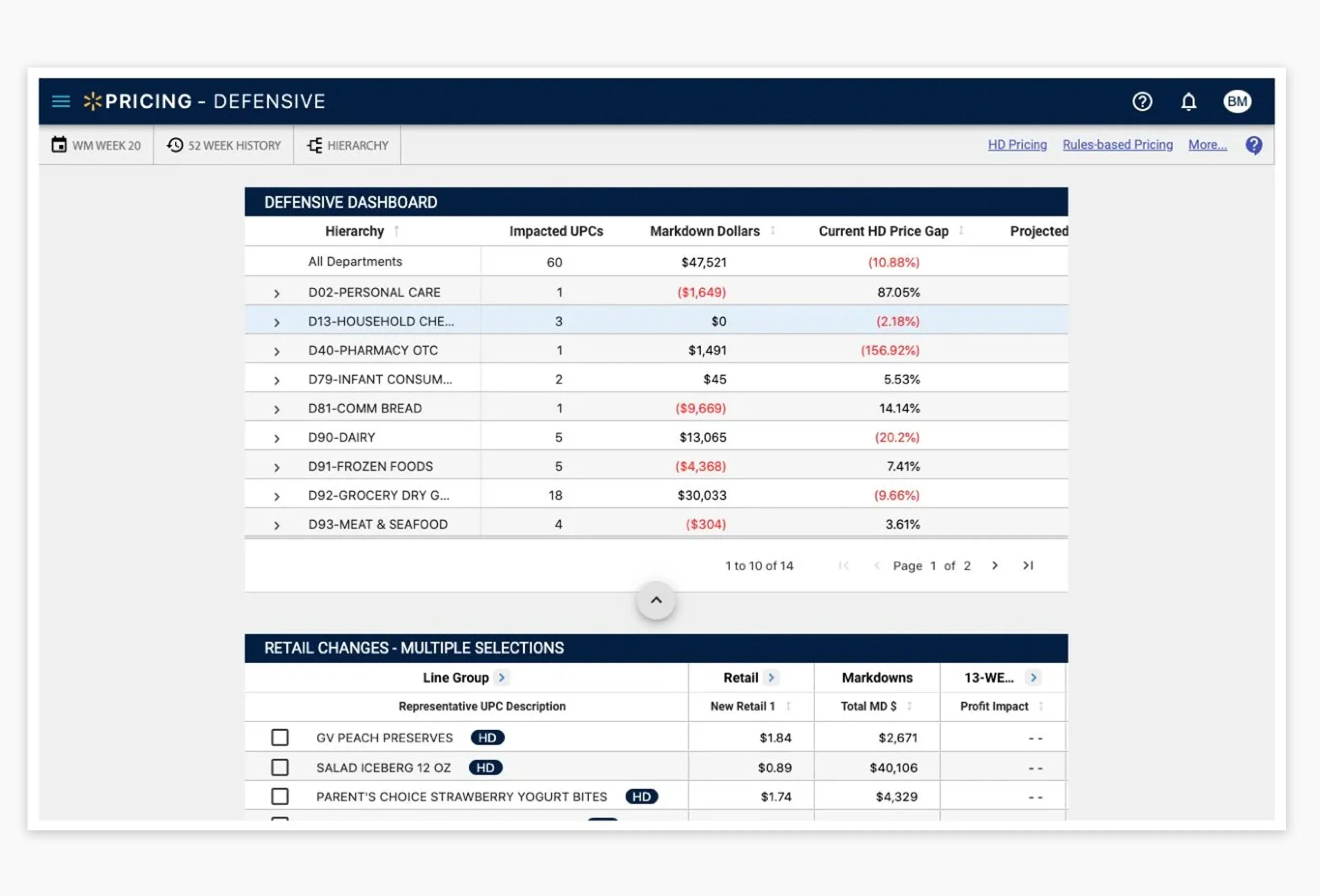
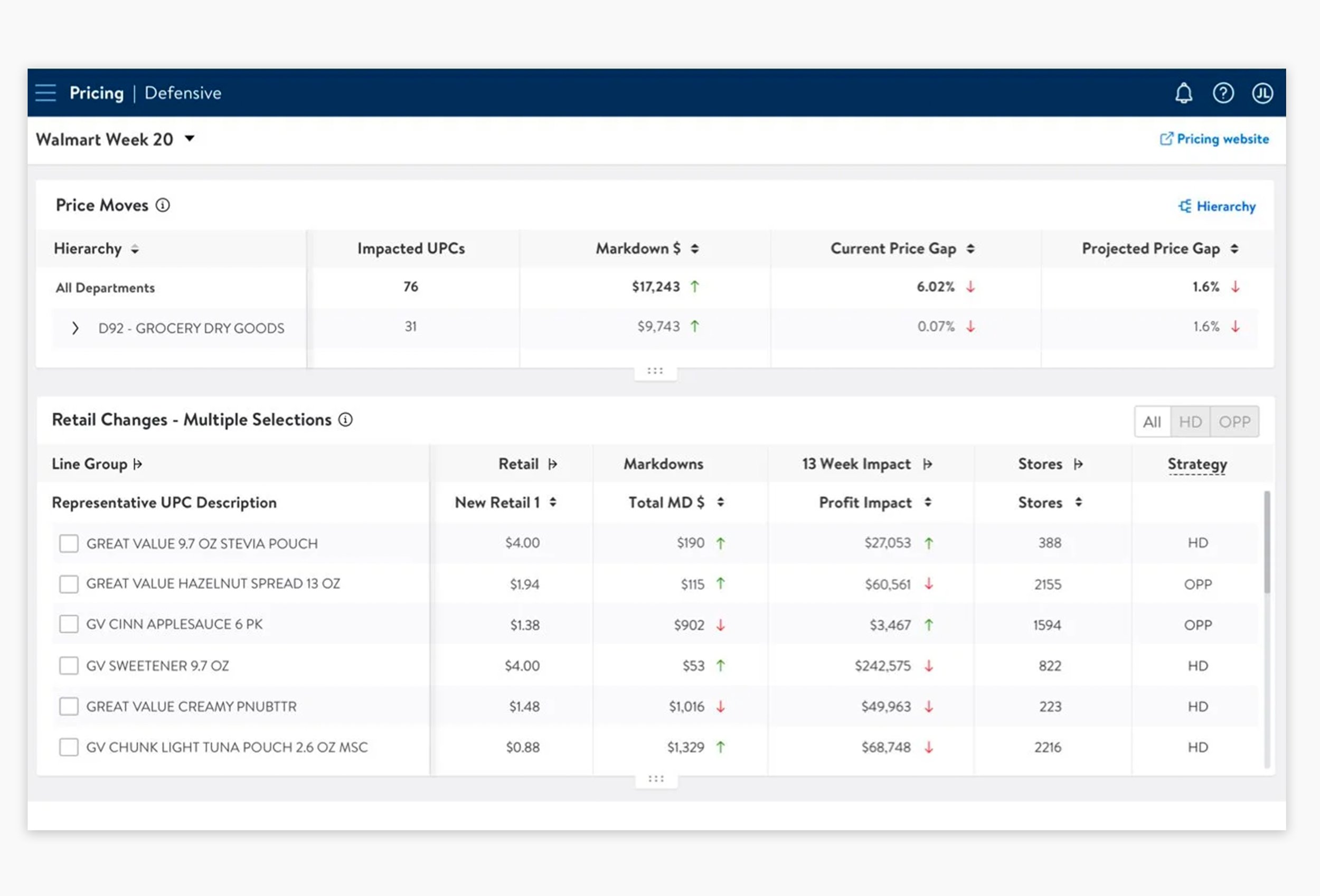
Tables were one of the most complex components to standardize. Usage varied significantly across teams, each with different structural needs, interaction patterns, and responsive requirements. This required multiple iterations to reach alignment, working closely with designers, engineers, and PMs to define consistent behavior that could flex across contexts without fragmenting the system.
Before
A fragmented table pattern with inconsistent structure, hierarchy, and interaction behaviors that varied across teams.
After
The redesigned table introduced a cleaner visual hierarchy, consistent spacing, and directional indicators that reduced cognitive load and helped users make faster, more confident pricing decisions.
Impact
Usability testing with 9 Buyers and Category Specialists validated core interaction patterns across table expand, column controls, and data visualization
Test findings directly informed final component decisions, improving scannability and reducing ambiguity for high-frequency pricing workflows
The redesign gave Category Specialists a faster, more confident way to interpret and act on complex pricing data at scale
LD+M / SketchLDE / Figma