Walmart Design Systems
What began as a single sticker sheet system evolved over three phases into an enterprise-wide design standard, scaling from a single Merchandising product to org-wide adoption across Walmart's Marketplace and Enterprise teams.
Phase 1: The Foundation
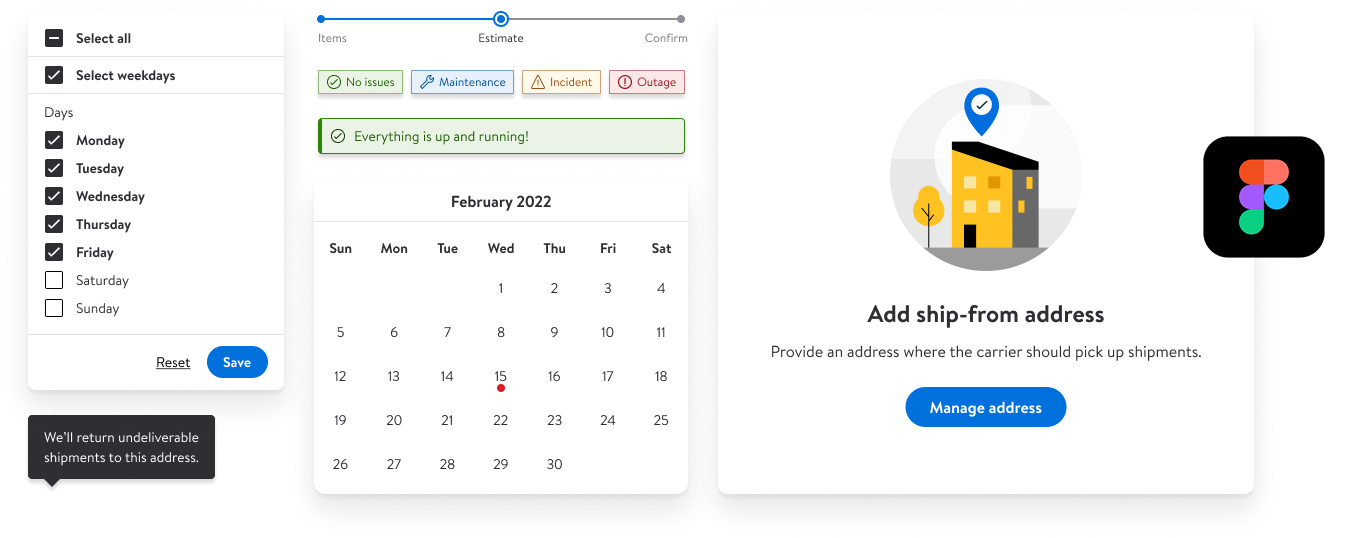
The foundation began with Flight Deck, a Walmart Merchandising product lacking a unified design language. I architected a component sticker sheet system in Sketch from the ground up, establishing a scalable source of truth for the design team. The system improved design consistency, accelerated workflows, and drove measurable efficiency gains across the product. The success of this initiative established my role as Design Systems Lead and laid the groundwork for org-wide design system expansion.
Phase 2: Shared System
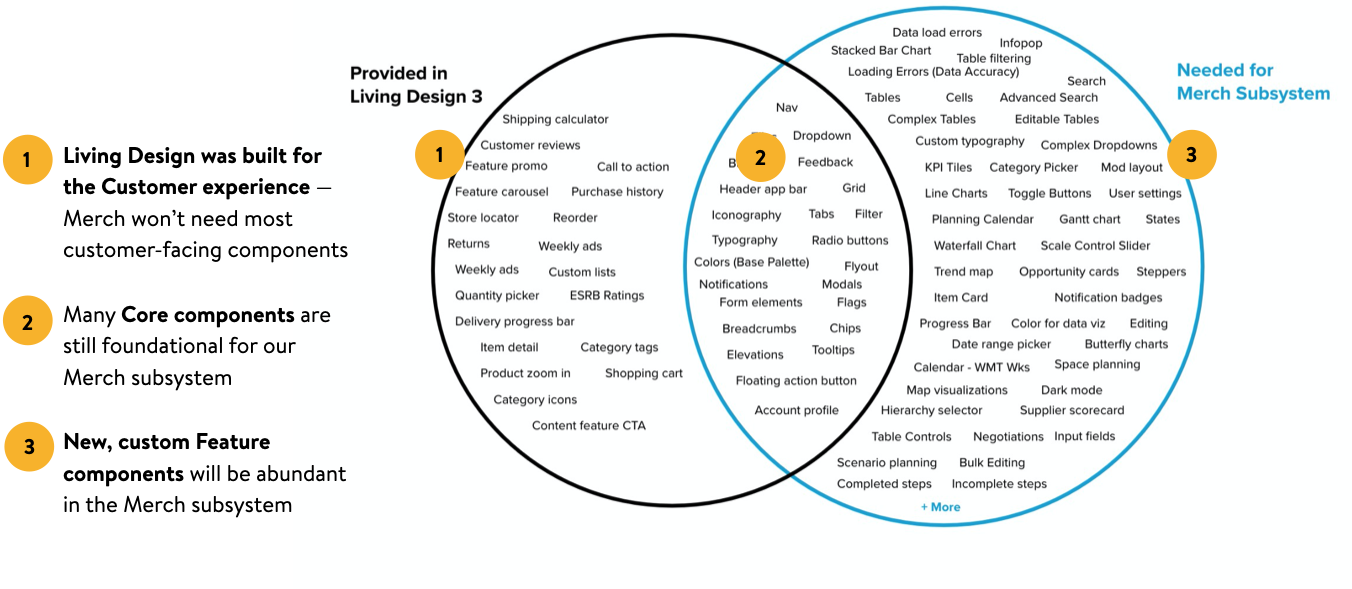
Phase 2 expanded scope significantly. I partnered with Walmart's customer-facing Living Design System team to align core components with Merchant tools, anchored to Merch One, a platform consolidation initiative bringing multiple Merchandising tools into a single unified product. This phase encompassed a full Sketch to Figma migration, cross-team component audits, and integration of fragmented design libraries across multiple Merchant teams. I also directed an embedded Accenture contractor team to scale component production. Governance frameworks including design syncs and office hours were established to maintain system integrity and prevent library fragmentation as the system scaled.
Phase 3: Org-Wide Standard
In Phase 3, the Merchant component library was selected as the foundation for Walmart's Enterprise Design System. I collaborated with cross-functional teams across the organization to consolidate components, drive adoption, and establish design standards at enterprise scale. Transitioning to the Walmart Marketplace team, I continued leading design systems strategy and contributed as Principal Designer to the Marketplace Design System. That system became the standard for enterprise product development, including Walmart Logistics Services, one of the first large-scale platforms built entirely on the Marketplace Design System.
Timeline
Time was always the biggest constraint. Because the libraries needed to keep pace with live product deadlines, we rarely had room for extended testing cycles. Instead, we leaned on internal feedback loops, community input, and iterative releases to keep things moving without compromising quality.
Components
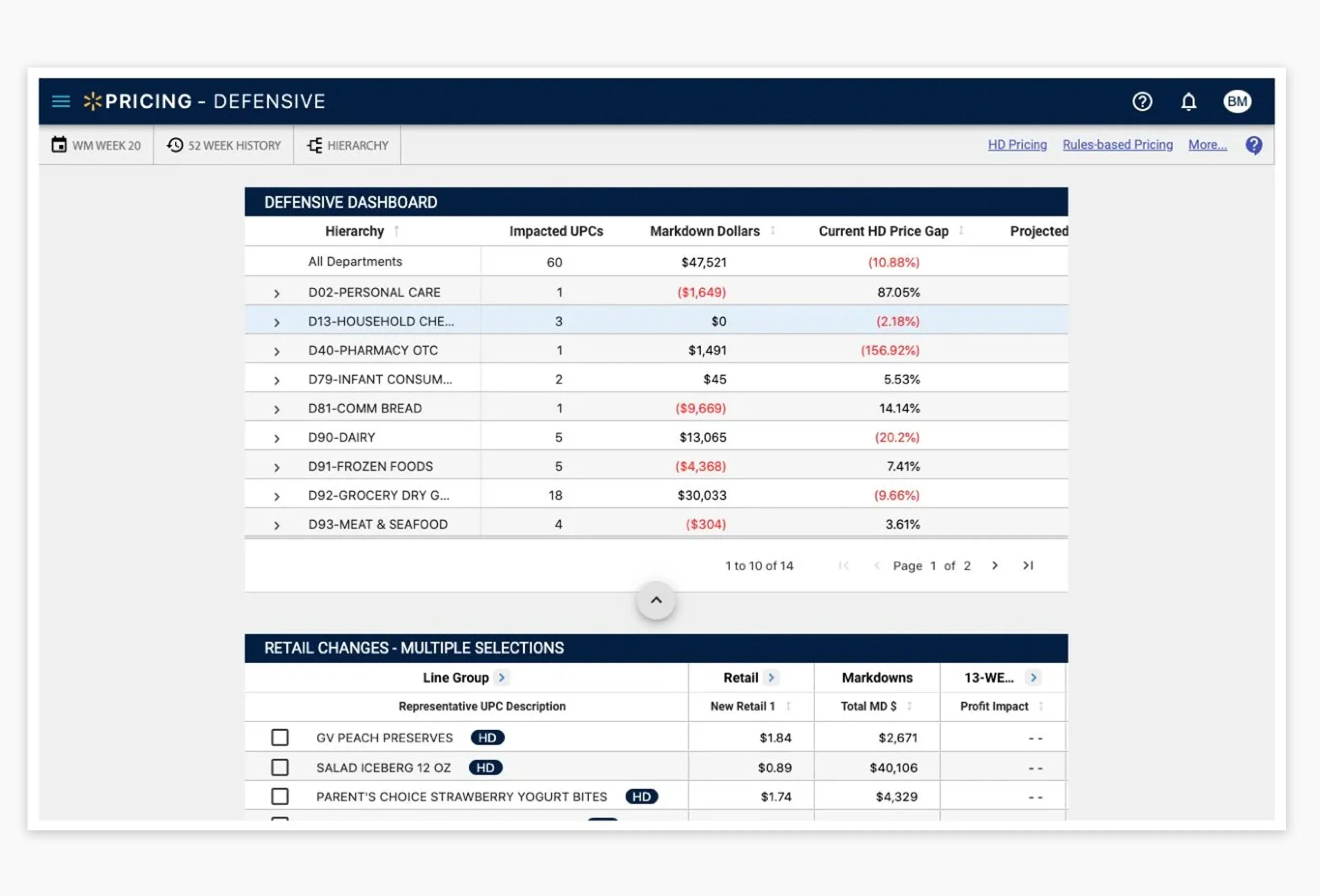
Tables were one of the most complex components to standardize. Usage varied significantly across teams, each with different structural needs, interaction patterns, and responsive requirements. This required multiple iterations to reach alignment, working closely with designers, engineers, and PMs to define consistent behavior that could flex across contexts without fragmenting the system.
Before
A fragmented table pattern with inconsistent structure, hierarchy, and interaction behaviors that varied across teams.
After
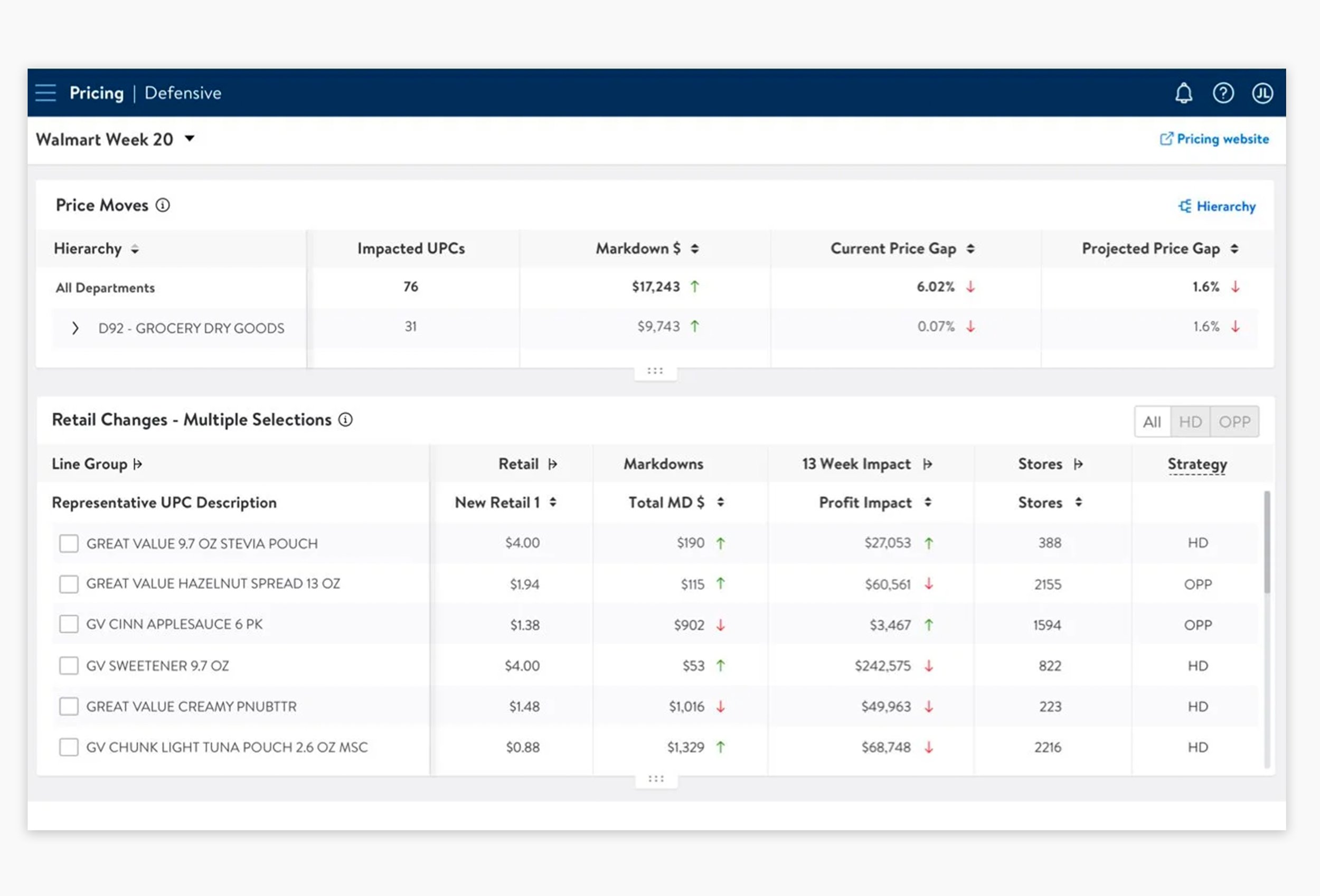
The redesigned table introduced a cleaner visual hierarchy, consistent spacing, and directional indicators that reduced cognitive load and helped users make faster, more confident pricing decisions.
Impact
Usability testing with 20 Buyers and Category Specialists validated core interaction patterns across table expand, column controls, and data visualization
Test findings directly informed final component decisions, improving scanability and reducing ambiguity for high-frequency pricing workflows
The redesign gave Category Specialists a faster, more confident way to interpret and act on complex pricing data at scale
LD+M / SketchLDE / Figma